The Influence of Progressive Jackpot Networks on Video Poker and Keno Engagement Patterns
Parker Hartmann · Jul 31, 2026

The Influence of Progressive Jackpot Networks on Video Poker and Keno Engagement Patterns
Progressive jackpot networks link video poker and keno terminals across casinos and online platforms so that a portion of every wager contributes to a shared prize pool that grows until someone hits the winning combination. These systems create larger jackpots than any single venue could offer on its own, and operators track how the rising totals affect the number of spins, hands played, and session lengths recorded by players.
Mechanics Behind Networked Jackpots
Each participating machine sends a small percentage of bets into a central pool managed by the network operator, while local jackpots may still exist alongside the shared one. Video poker variants such as Jacks or Better and Deuces Wild often appear in these networks because their pay tables remain fixed even as the progressive meter climbs, whereas keno draws integrate progressive top prizes by adding extra balls or bonus rounds once the meter reaches certain thresholds. Data collected by system providers shows that jackpot meters typically increase by several thousand dollars per day when participation exceeds a few hundred machines, and this growth rate accelerates during peak evening hours when more terminals stay active.
Observed Shifts in Video Poker Play Patterns
Researchers monitoring transaction logs note that average hands per hour rise noticeably once a progressive meter surpasses a threshold that players recognize as above normal levels. Sessions lengthen because participants continue playing while the meter keeps climbing, and the frequency of maximum-coin bets increases since many networks require the top wager to qualify for the full jackpot. Figures from multiple casino floors indicate that video poker terminals connected to networks record higher daily handle than standalone machines during the same periods, with the difference most pronounced on weekends when tourist traffic adds to regular local play.
Engagement Trends in Networked Keno
Keno games linked to progressive networks display similar but distinct patterns because draws occur at fixed intervals rather than on every spin. When the shared jackpot grows, operators report higher ticket sales per draw, especially for combination bets that cover more numbers and carry larger potential payouts. One study of terminal data revealed that the proportion of players selecting progressive-linked cards climbs steadily as the meter advances, while repeat participation within a single evening also increases compared with non-progressive keno offerings. These shifts appear consistently across both land-based parlors and online platforms that share the same network infrastructure.
Comparative Data and Regional Records
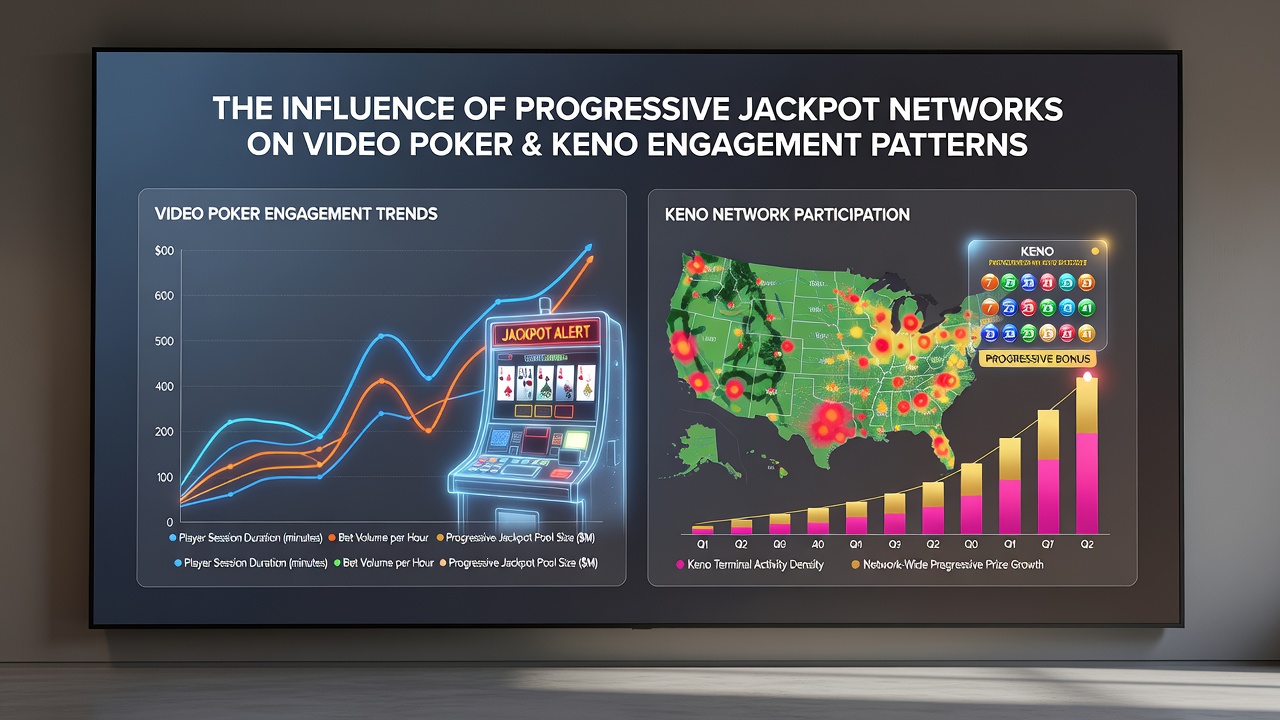
Records maintained by the Nevada Gaming Control Board document month-to-month variations in video poker and keno revenue that correlate with publicized jackpot levels, and similar patterns appear in reports issued by regulators in other jurisdictions. As of July 2026, network operators noted that cross-state and international linkages produced meters exceeding several million dollars more frequently than in previous years, coinciding with measurable upticks in terminal utilization during those high-meter periods. Observers note that keno engagement responds more sharply to sudden meter jumps after a rollover, whereas video poker shows steadier increases tied to gradual accumulation; both games nevertheless exhibit longer average session durations once players perceive the jackpot as attainable.
Industry reports compiled by groups such as the Victorian Responsible Gambling Foundation track how progressive structures influence repeat visits, and findings indicate that locations advertising current meter amounts attract additional foot traffic on days when totals reach publicized milestones. Network providers supply operators with real-time dashboards that break down participation by machine type, time of day, and player card tier, allowing venues to adjust marketing messages accordingly. These dashboards also capture the rate at which jackpots reset after wins, which in turn affects the speed at which new engagement cycles begin.
Conclusion
Progressive jackpot networks continue to shape how players allocate time and wagers across video poker and keno offerings by concentrating activity around growing prize pools. Transaction records, regulatory filings, and operational dashboards consistently show elevated handle, longer sessions, adn higher maximum-bet percentages when meters reach elevated levels. The same data sets reveal that these effects persist across different regions and platforms, confirming that networked jackpots remain a central factor in current engagement patterns for both game categories.